THE MASTODON COFFEETREE,
Gymnocladus hesperia
By Eric Martindale Oct 5th, 2026
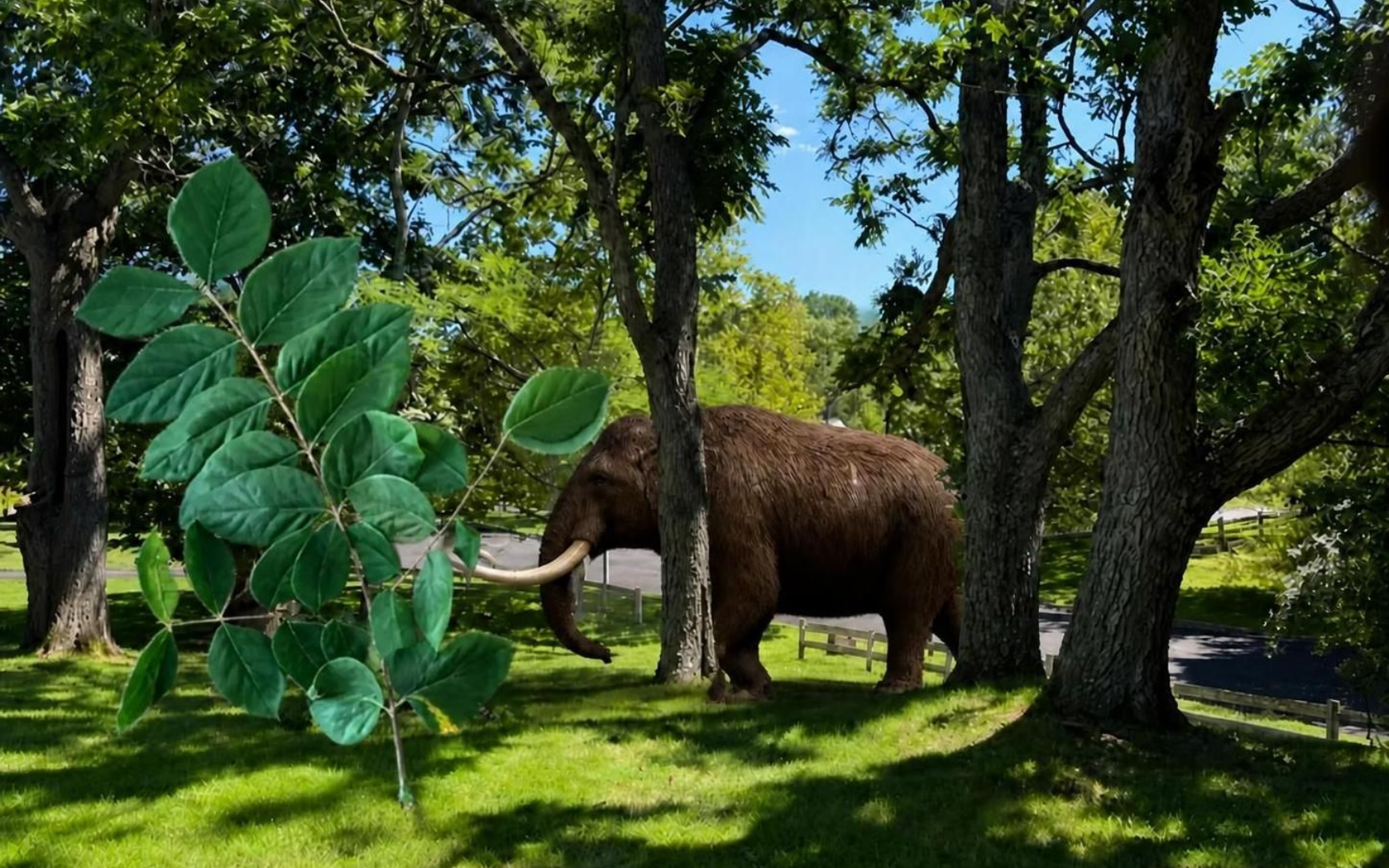
LIVING FOSSIL FOUND IN BRANCHBURG, NEW JERSEY
Gymnocladus dioicus (Kentucky Coffeetree) has been documented as the only species in its genus in North America. Now, there is a newly discovered and critically endangered species known unofficially as the Mastodon Coffeetree. It’s known from eight specimens in Branchburg, Somerset County, New Jersey. Its leaflets are tremendously larger than Gymnocladus dioicus and the other five Gymnocladus species in Asia. The leaf structure is completely divergent from G. dioicus, and the canopy structure is very open and tufty. This is the Eocene fossil species Gymnocladus hesperia, known from the Green River Formation.
TABLE OF CONTENTS
- The Leaves Compared
- Natural Variation of Kentucky Coffeetree
- Canopy Structure Compared
- Known history of the Property .
- Review of Five Gymnocladus species from Asia.
- My Goals
- Conclusions
THE LEAVES COMPARED
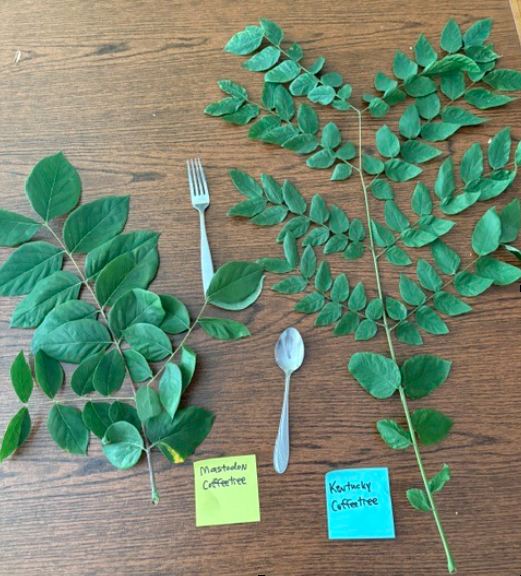
Mastodon Coffeetree (left) from Branchburg, NJ, and Kentucky Coffeetree (right) from Teaneck, NJ.
Edward MacGinitie first described G. hesperia from fossil leaves in 1967. While the Mastodon Coffeetree could be a completely unknown species and not G. hesperia,
the safest position is to say that it is a modern subspecies of G. hesperia found in the fossil record, but
not
different enough to be classified as its own species.
That is a conservative position. The primary basis for this claim is comparing all known Gymnocladus species, as follows:
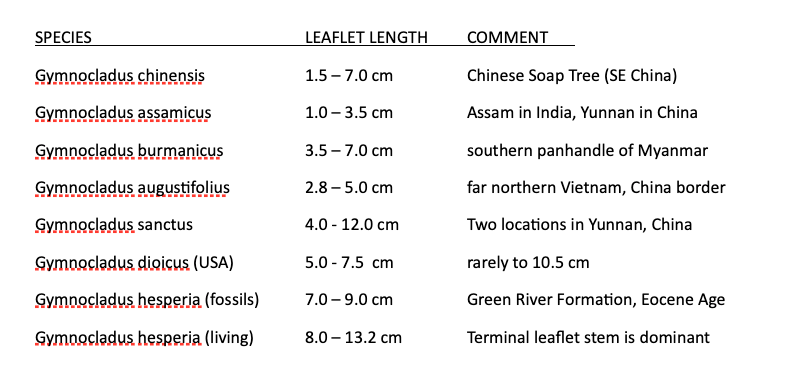
Modern botanists and paleontologists are free to disagree that the Mastodon tree is G. hesperia. They can say the leaflets are too big to be G. hesperia, just as MacGinitie said G. hesperia is too big to be G. dioicus. That would be a continuation of MacGinitie’s reasoning. The overriding factor is that the G. hesperia fossils are the closest thing to these Mastodon Coffeetree leaves, and they are from the same continent. An identification as G. hesperia should be the starting point.
Scientists are encouraged to compare the fossil leaves in detail to those from living Mastodon Coffeetree and Kentucky Coffeetree specimens, and if the taxonomical evidence warrants, they can publish a scientific paper establishing that the Mastodon Coffeetree is a species separate from the fossil species G. hesperia. I estimate 25% that will happen. I don’t have the credentials to publish a scientific paper. What I can do is gather the evidence, and present it.
This relic population of 8 mystery coffeetrees contains 7 trees on a 1.1-acre residential property, including a champion which is approximately 11 feet in circumference. The 8th tree is on a neighbor’s lawn, and it is about 2.5 feet in circumference. It is not yet known if this is the site of a former Native American village. It’s at the right place for one, at the top of a low rise, and about 50 yards from a babbling brook which could source fresh water.
There may be only two female specimens. There is strong reason to believe that the female trees bear fruit every two years, unlike G. dioicus which bears fruit every year. One mature female specimen was found bearing Gymnocladus bean pods with beans. Another mature specimen may also be a female, but in an “off year” and not fruiting. The homeowner identified that tree, just west of his garage, as the tree that produces the most bean pods. This specimen dropped two flat bean pods in August, without any beans. No other bean pods were hanging.
When paleontologists first studied the leaflets from the Green River Formation, they concluded that they were Gymnocladus leaves. It was amazing to find Gymnocladus leaves 2.7” – 3.35” inches. Kentucky Coffeetree leaflets are commonly in the range of 2.0 - 2.5”.
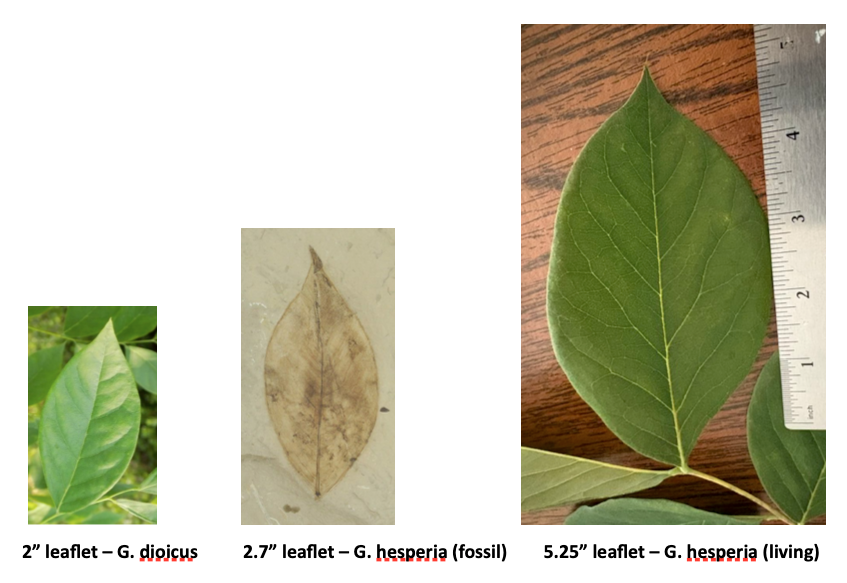
MacGinitie and Banisteria B. Brown said that the size, venation, and shape of the apex (leaflet tip) on the fossil leaflets were too different from G. dioicus, and therefore it’s a different species.
The below link is a good summary article describing how the coffee trees co-evolved with megafauna once native to the United States. https://poorprolesalmanac.substack.com/p/kentucky-coffee-tree?utm_campaign=post&utm_medium=web
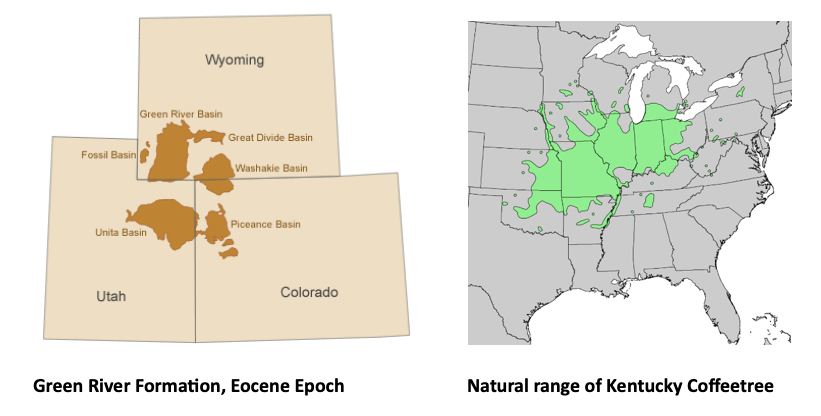
MacGinitie described a completely new species, Gymnocladus hesperia. Hesperia means west, because the Green River Formation is west of where G. dioicus is now found.
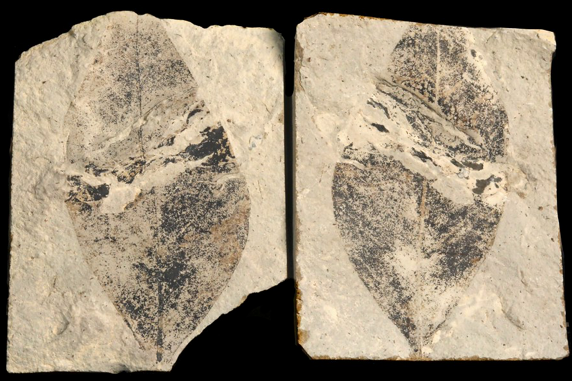
Legume fossil from Mississippi embayment formation, Alabama +/- 35 mya. Could be Gymnocladus.
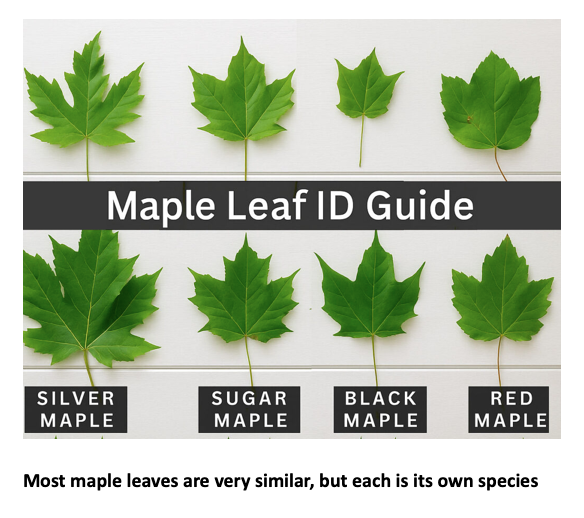
Just for comparison purposes, below are some maple leaves. Nobody is going around saying these maples are the same species, with “regional variations in the leaf shape”. Same issue for cherries, willows, birches, and even some oaks.
It’s an understatement to say that the leaves of G. hesperia are different from other Gymnocladus. It’s absolutely prehistoric and completely different from all other trees, period. The large terminal spine of leaflets is so dominant that the entire leaf is almost a compound leaf, like a Walnut or Ailanthus. Think of it as a compound leaf that has one pair of much smaller leaflet stems jutting out near the bottom of the leaf. The ancestors of G. hesperia were likely compound leaves, and G. hesperia is an early stage of bipinnate. It is a missing link to the more complex bipinnate leaves of the rest of the Gymnocladus genus. This is going to blow the socks off the entire botanical community. Why is there even a debate that this is a different species from G. dioicus? There’s absolutely nothing like it in North America. Not in Gymnocladus, and not in any other genus native to North America.
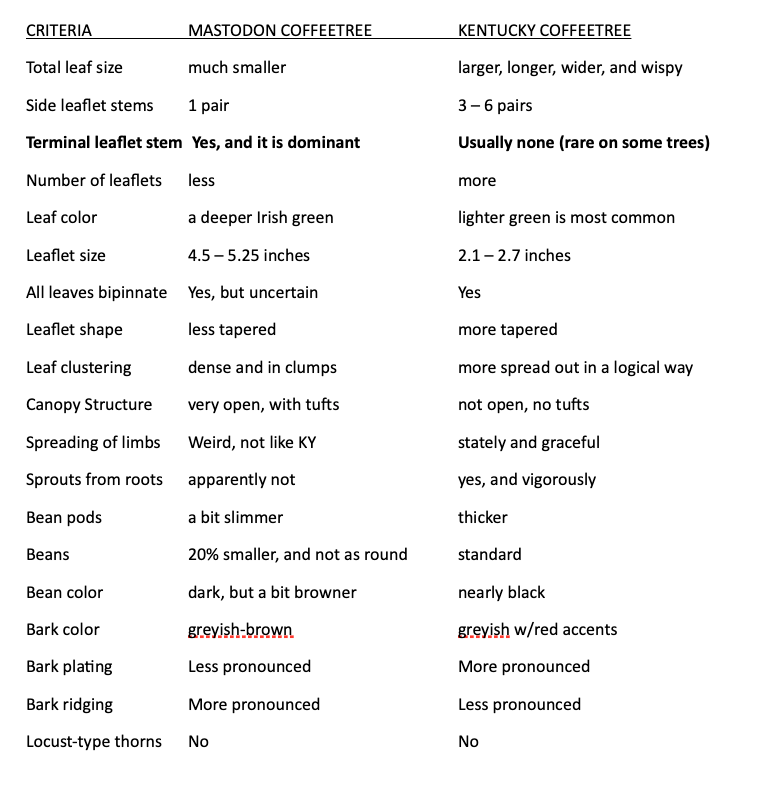
The large size of the leaflets in the Mastodon Coffeetree is outside the natural variation of leaflet size for the Kentucky Coffeetree. More importantly the whole structure of the leaf is different. G. dioicus has no terminal leaflet stem. I searched through hundreds of images online, and I did find one G. dioicus leaf image with a very short terminal leaflet stem at the end of the leaf. It’s #9 on the display of 10 coffeetree leaves.
Mastodon Coffeetree not only has a large terminal leaflet stem, but it’s dominant, and the terminal stem has the largest leaflets. The terminal leaf stem is the defining characteristic of the species.
LEAF DIFFERENCES BETWEEN G. HESPERIA AND G. DIOICUS
NATURAL VARIATION OF KENTUCKY COFFEETREE
Some observers are commenting that the Mastodon specimen is simply a variation of Kentucky Coffeetree. For now, let’s just look at 10 various Coffeetree leaves. Let’s consider which are G. dioicus, and which might be other species:
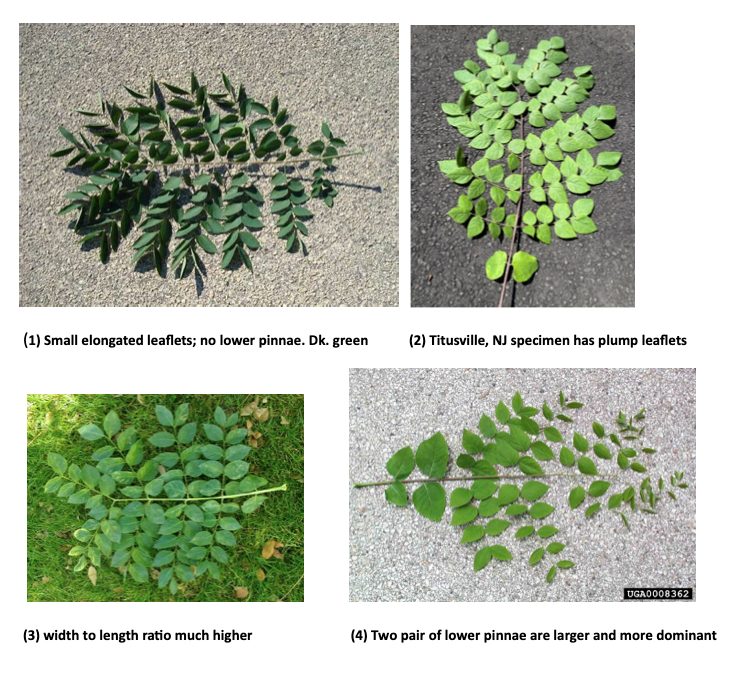
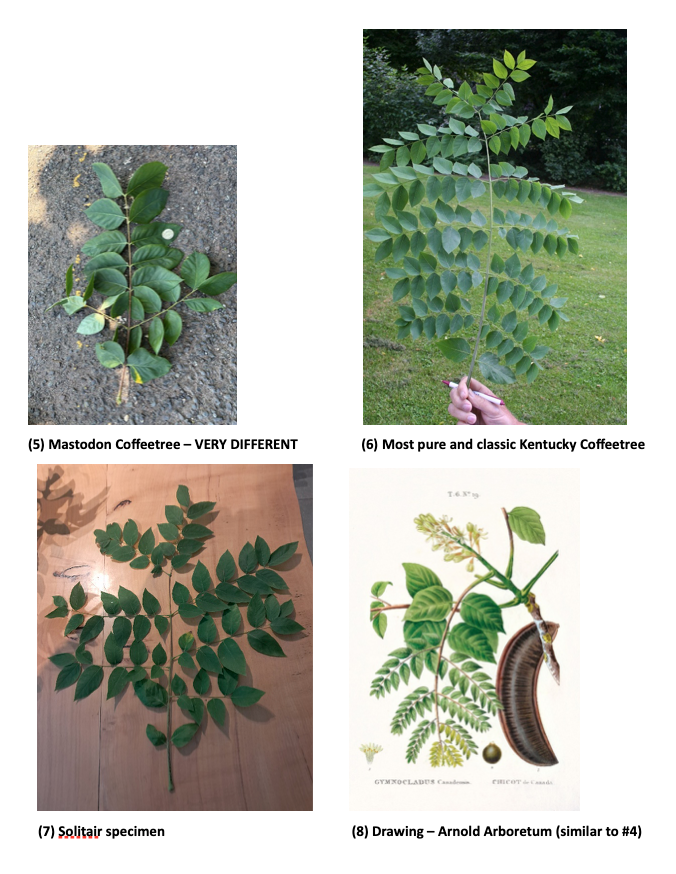
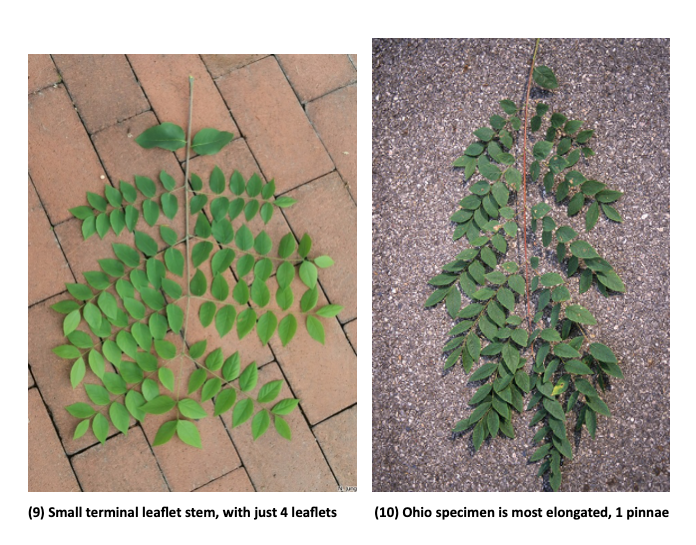
Just to be clear, #5 is G. hesperia, and the other nine leaves are G. dioicus, at least for now. There can be speculation on whether some of these could be other species or subspecies:
VARIETY A, classic Kentucky Coffeetree = Images 1, 6, and 10
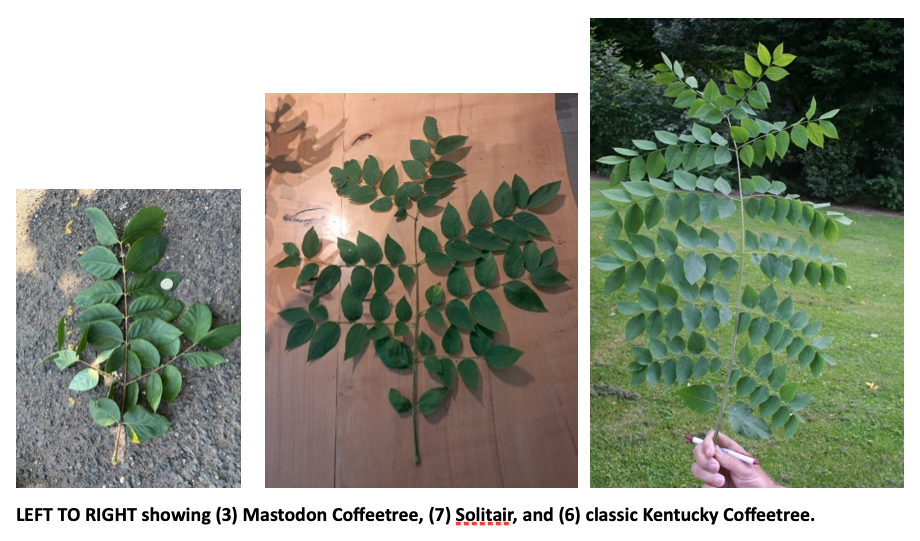
VARIETY B, a stouter-leaf species = Images 3 and 7
VARIETY C, huge bottom pinnae and small leaflets at the end = Images 4 and 8
The above images show considerable variation of Gymnocladus dioicus in size and leaf color, but nothing remotely close to the leaves of the Mastodon Coffeetree. Some of the differences in these images may reflect hybridization. Pure and distinct tree species can and do hybridize. If hybridizing was going on, that actually adds great weight to the claims that the Mastodon Coffeetree is another species of Coffeetree. G. dioicus would have had to hybridize with another species of Coffeetree to produce its leaf variation. Is that species the G. hesperia?
There’s a serious geneticist named Eugene McCarthy who believes the creation of new species is entirely the result of hybridization, a concept that he calls macroevolution. He has coined the term “Stabilization Theory”. It explains how a species can exist stabilized and unchanged, even for tens of millions of years. After an initial hybridization event, a long time goes by before a new species is genetically “stabilized”. Stabilization Theory is the strongest definition of species I have ever read. McCarthy’s take on hybridization and Stabilization Theory could be relevant here, so I am including it. www.macroevolution.net
The Solitair image (#7) was sent to me from the Solitair tree farm in Loenhout, Belgium. https://www.solitair.be/contact/ I contacted them because the Solitair leaflets online were intriguing. They emailed me a picture of an actual leaf. It’s not a Mastodon Coffeetree. However, the leaf structure is clearly not graceful and symmetrical like the most classic G. dioicus. It’s seriously divergent, and closer to image #3. Image #3 was found online; we don’t know from which American State. Is the Solitair specimen and Image #3 yet another species of Coffeetree? I am certain that Solitair is not G. hesperia because it does not have the large and dominant terminal leaflet stem of G. hesperia.
The gracefulness of #6, the classic Kentucky Coffeetree, might be a reflection of its stabilization. This is the most common variant of Coffeetree. It is the “pure” form with zero hybridization. Note that the leaflet pattern is also the most symmetrical, and the color is a lighter green.
If Solitair knows the American source of the original beans, they are advised to get more beans from that same source and establish a population of male and female trees, and to prevent hybridization with classic G. dioicus. Solitair is an important genetic lineage.
Let’s consider the possibility that there was once a large and diverse lineage of Gymnocladus species in the United States, like the many species of oaks and maples. It retreated and expanded with every glacial cycle. Megafauna frequently knocked over trees, creating enough sun for the various Gymnocladus species to grow well, and they pooped out seeds ready to germinate. Gymnocladus species were very common. When the megafauna disappeared, those tree species started disappearing one by one. Those that survived retreated into very small populations. Native Americans then cultivated them for soap and medicinal purposes.
Botanists saw that the coffeetrees were rare, and decided without serious thought that it’s one species which is rare throughout its range. Now with the discoveries of the Mastodon Coffeetree in New Jersey and Gymnocladus sanctus in China, this can be re-evaluated. It might be prudent for science to break up G. dioicus into several species.
CANOPY STRUCTURE COMPARED
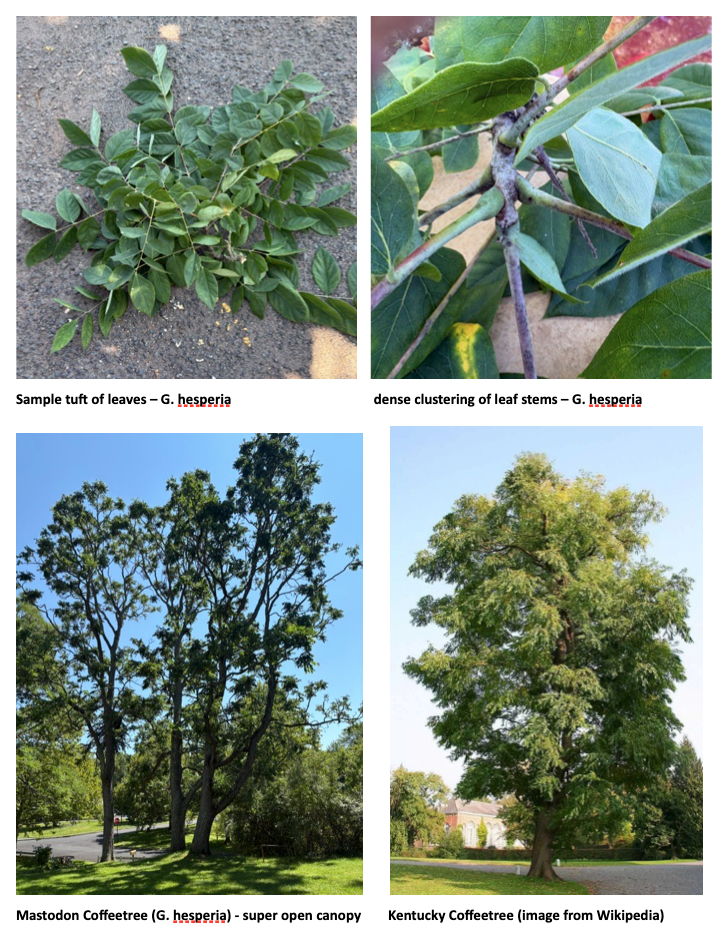
These Mastodon Coffeetrees are weird trees, especially the older ones. It even LOOKS like a living fossil. I’ve never seen any deciduous tree with such an open canopy. The leaves are clumped into what I call “tufts” that are a bit comical, something like a Dr. Seuss tree. The tufts and the open canopy are the defining aspects of the species. A cut twig looked like it was decades old, and each year it just added a millimeter or so to the length.
I didn’t count how many leaves were on the tuft, but all the leaf stems were clustered very tight together. The clustering and tufts are reminiscent of some specimens of Black Walnut and Ailanthus, but much denser and more pronounced. All the leaves were anchored to the twig within just a few inches of each other.
Another difference is the reproductive strategy of the two species. Kentucky Coffeetree sprouts vigorously from the roots, and even makes colonies. There is no evidence at the farmhouse site that Mastodon Coffeetree does this. Another factor in making them rare.
BARK COMPARED
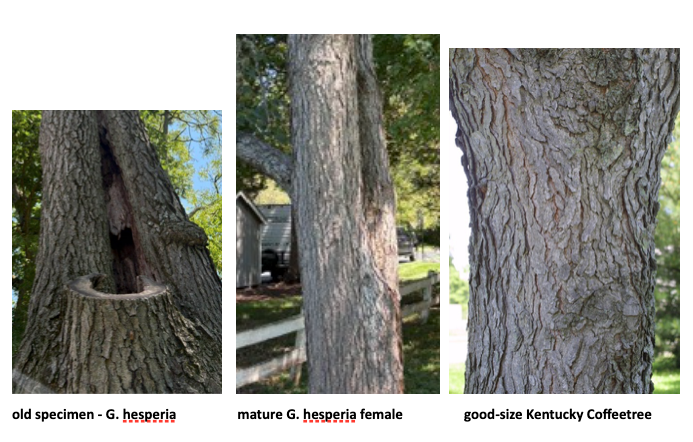
There is some variation on the bark of both species. The Mastodon bark is browner, but not as brown as Black Walnut. There are little or no hints of orange or red. Kentucky Coffeetree is more likely to be a lighter gray and for the bark to be have more plates than ridges. On some specimens, the plates are more pronounced than others. G. dioicus will have accents of orange or red around the edges of its plates, more so on younger specimens.
KNOWN HISTORY OF THE PROPERTY
I visited the homeowner’s house on August 1, 2026 to quote a home improvement project, and I parked my car right under a female Coffeetree, with bean pods hanging. What struck me were leaves. Dendrology is just a hobby for me. I’m a contractor, and I specialize in Bilco-type doors. www.glazedcellardoors.com In past decades, I led successful open space campaigns.
The primary theory for the origin of the trees on this property is that the original farmhouse owner planted them around the house 150 - 250 years ago, so that the seed pods could be food for horses or pigs. Wherever he got them from, that population is very likely extirpated. A secondary theory is that the farmhouse was built on a low rise near a babbling stream, at the site of an abandoned Native American village. Some specimens remained.
The farm was turned into a housing subdivision about 20 - 30 years ago, with dozens of houses on approximately one-acre lots. The original farmhouse now sits on 1.1 acres. I searched the neighborhood and found only one more specimen. The homeowners who own 7 specimens are supportive of preserving the trees, and are very interested in all findings.
The existing population is on upland soils. There are no major hills in the vicinity, but the terrain is rolling. The geology is layers of red shale and red sandstone bedrock of the Newark Formation, of Late Triassic age. Actual bedrock is likely to be at least 10-30 feet underground.
Some specimens have a single trunk that trends upwards, but the trunk is not perfectly straight on any specimen. On other specimens the trunk divides into two, and over time one of those becomes dominant, and the other is secondary. The species most likely prefers open sun. The leaves are a deep Irish green, a deeper shade than most Kentucky Coffeetree. They start to turn yellow at the end of September and early October.
The bean pods are similar to Kentucky Coffeetree, but the beans inside are a tad smaller and not as dark. I was unable to see the flowers, as my visits were past the flowering season. They are believed to be dioecious, meaning a tree has either male or female flowers. This is uncommon in deciduous trees, and may reflect a more primitive state of evolution.
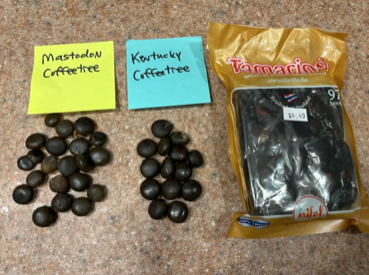
The “coffee seeds” and Tamarind
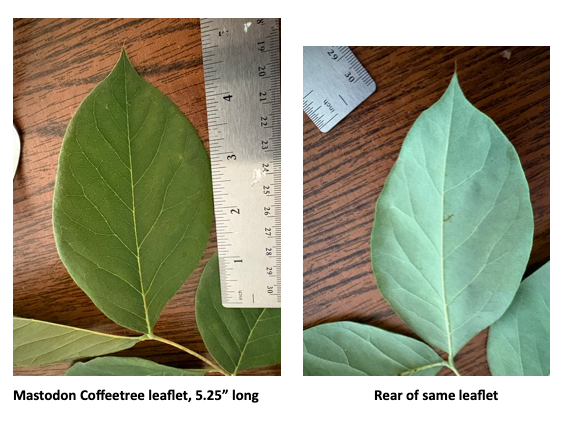
The leaves are dominated by a large terminal spine directly bearing larger leaflets than those on the secondary leaflet spines. The terminal spine has 5 pairs of very large leaflets, for a total of ten. There is only one pair of secondary leaflet stems, and 1 pair of pinnae below them.
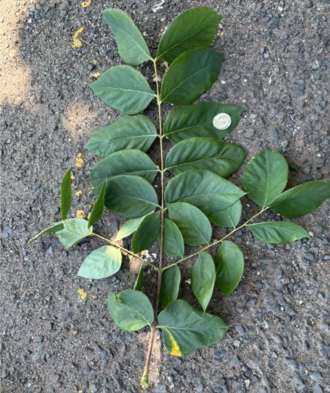
Representative leaf of G. hesperia from a mature tree
It’s a bit scary that the fate of this species could rest with one or two female specimens. I collected 21 seeds from the leaf litter. All 21 passed “the float test”, meaning that they sunk in a pot of water. There’s a good size stash of seed pods under a large holly bush. I own a house on 3.5 acres a half hour away. I will germinate the seeds and plant them on my property.
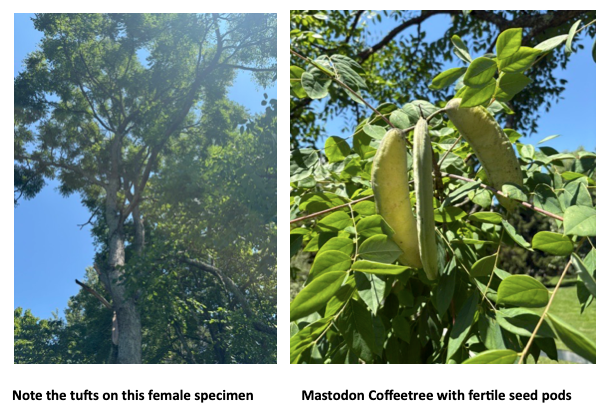
I was going to try the pulp in the bean pods as a tea, but then I read that G. dioicus pulp is used as a soap, and to stun fish. These bean pods may have the same toxins found in G. dioicus. If there’s any chemical compounds that are medicinal, they would have to be carefully extracted.
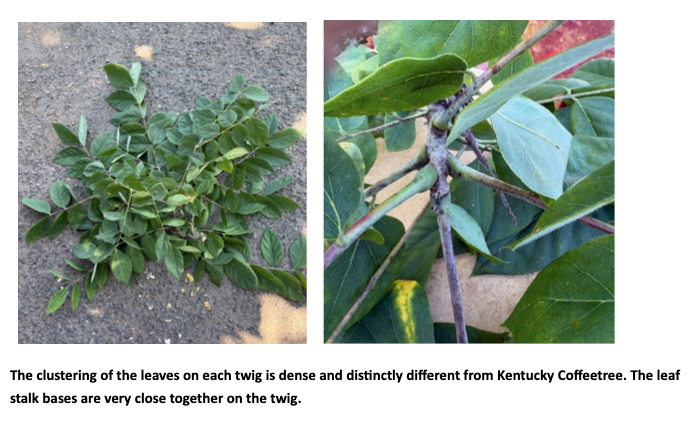
The below trees are all very healthy, and they are distinctly different from Kentucky Coffeetree. Each branch has just a few tufts of leaves, and the canopy is open between them. Just perfect for a Mastodon to wrap its trunk around a leaf cluster, and pick it with a few bean pods
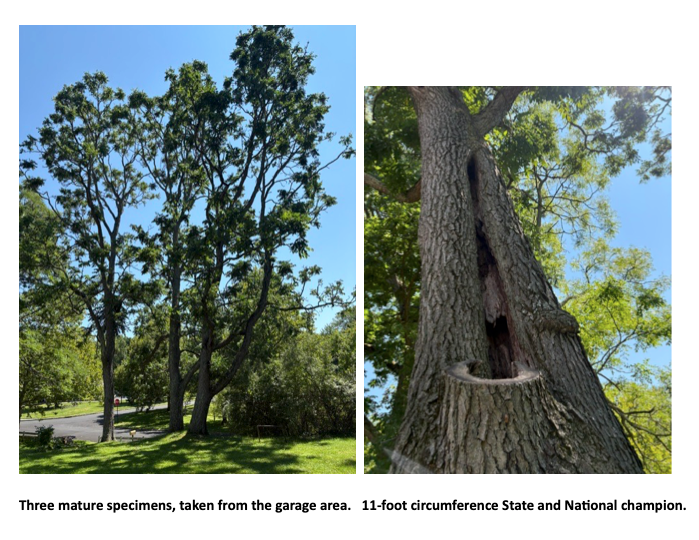
If this were G. dioicus, it would be the State Champion for New Jersey. I’ve chosen not to nominate it as State Champion for G. dioicus for New Jersey. It’s the champion G. hesperia.
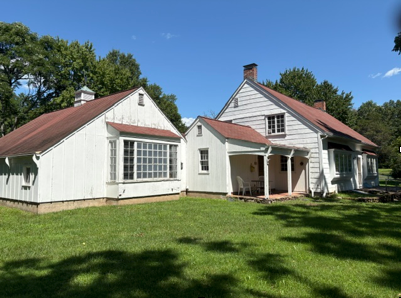
The old farmhouse in Branchburg, NJ
REVIEW OF FIVE GYMNOCLADUS SPECIES FROM ASIA
In order to establish that this is an undocumented species or a living fossil species, we must identify all known Gymnocladus species, to rule out that “these may be a non-native Gymnocladus already known to science that were planted here”. Here is a link for a taxonomic review of the genus Gymnocladus, with emphasis on Asian species. It’s written in technical jargon, good for scientists, bad for the general public.
The average person finds technical writings difficult to read, so I created a Word document that summarizes the above link, and focusses in on the relevant information.
Analysis of Taxonomic Review by Eric Martindale
CHAPTER SUMMARY - The conclusion of the Gymnocladus review is that none of them are close to the Mastodon Coffeetree. Four of them have very small leaflets, including Chinese Soap Tree. These species can be easily and firmly ruled out. Only G. sanctus is anything like Kentucky Coffeetree, but it is missing the large terminal leaflet stem of G. hesperia.
MY GOALS
For the G. hesperia species to be identified as living, and more formally described by science. The taxonomical differences are enough to make the call. A DNA comparison to Kentucky Coffeetree would be welcomed, and it would provide incontrovertible proof.
For conservation efforts to initiate. Mastodon Coffeetree is a critically endangered species. Specimens can be grown and planted in arboretums, in parks, in school yards, in fields, etc. The recovery of this species will be an amazing conservation success story.
Conservation Strategies. If individual non-reproducing specimens are found, grow saplings from fertile beans gathered at the Branchburg location, and plant at least four of them near each individual male or female tree. When they mature, there’s a very high chance that there will be a reproducing population of both male and female trees. Another conservation option for individual trees that are found is to identify if each is male or female. Then graft twigs from distant trees of the opposite sex. After a few years these new branches will flower, and cross-pollinate with the rest of the tree. This will also work for the female G. sanctus archetype specimen at the temple in China.
There may be medical applications for Mastodon Coffeetree including antioxidant and anti-inflammatory effects, blood-sugar and cholesterol control, and cardiovascular matters, Alzheimer’s, and more. Native Americans are known to have prized G. dioicus, and used the wood pulp and beans as medicine.
Persons wishing to contact the homeowner and examine the trees will have to go through me. The homeowners are supportive of conservation efforts, but should not be overwhelmed. This is private property. People should not be visiting the site or walking on the property.
CONCLUSIONS
Botanists and paleontologists who have studied the fossil G. hesperia leaves will be astonished that the species has been found alive. This is big news in the fields of botany and paleontology. G. hesperia can now be studied, and the information gathered will help round out the scientific understanding of the Legume Family and its origins. There are over 19,000 species of Legumes, covering everything from peas and soybeans to Acacias and Locusts.
Conclusions are represented below as percentages, meaning what chance does this author think a statement is correct. These percentages will change over time as more information becomes available.
100% = The mystery Coffeetree is not any of the Asian species of Gymnocladus.
Over 99% = The mystery trees are not a random hybrid. If I was one specimen, that’s a possibility. What’s the chance that 8 specimens are each a hybrid
95% = The mystery coffeetree species is more closely related to Gymnocladus hesperia than to Gymnocladus dioicus. Hesperia is known only as fossil leaflets, Eocene Epoch.
75% = The Mastodon Coffeetree is Gymnocladus hesperia. It is a living fossil. The leaflets of the Mastodon Coffeetree are much larger even than fossils of G. hesperia, and less elongated, but these differences do not rise to the level of speciation. 25% chance is that botanists will ultimately decide the differences with G. hesperia fossils are too great, and it is neither G. dioicus or G. hesperia.
60% = The tree population at the farmhouse in Branchburg, New Jersey, was planted by the original owner of the house between 1750 and 1850. The trees were very rare in nature at the time, but could still be found. 40% = There was a Lenape Native American village at the site. They cultivated the trees. The house was built, and some of the G. hesperia trees remained. Seeds of the Mastodon Coffeetree were sold or traded between 1750 and 1850, and misidentified at the time as “Kentucky Coffeetree”.
90% = Mastodon Coffeetree is extinct in nature. The species had been cultivated and saved from extinction by Native Americans since the extinction of the megafauna, because of the medicinal value of the pulp in the seed pods.
50% = The Mastodon Coffeetree was originally native to New Jersey and Eastern Pennsylvania, which are outside of the natural range of G. dioicus. 50% it was native to elsewhere in the United States, and The Lenape brought it here via trade with other tribes, or via their own migration to New Jersey from the Midwest.
90% = Other Mastodon Coffeetrees that were planted long ago are still alive. Living specimens are out there, mostly very old specimens that were planted between 1750 and 1850, or earlier. Female specimens that are growing without a nearby male partner are not producing bean pods with viable beans. Where to look:
- In and around old cemeteries, parks, farmhouses, and abandoned farmhouses.
- At sites of former Native American villages, esp. on high ground near rivers
- Around very old churches, colleges, and estates in historic districts
- Along former canal tow roads, many of which are now public greenways in New Jersey.
- In the larger (older) cities of the northeastern United States
Now it is time for botanists and paleontologists to take up the case of the Mastodon Coffeetree and its conservation efforts. I will do what I can to propagate the seeds and establish another population on and near my own property.
It’s hard for novices to separate hickories, ashes, walnut, butternut, Ailanthus, and Locust trees because they all have compound leaves. The Mastodon Coffeetree does not have this problem. Think of the Mastodon Coffeetree as a compound leaf, but with two additional leaflet stems extending out near the bottom of the leaf. No other tree has a leaf like that. They are absolutely unmistakable.
I am keeping a database for individual specimens and any populations of G. hesperia. Any reader who identifies a specimen or a population is requested to email me and provide the location with a picture of a leaf.
Eric Martindale, owner
Glazed Cellar Doors by Confident Home Remodelers
#Gymnocladus #GymnocladusHesperia #hesperia #livingfossil #Branchburg #SomersetCounty #KentuckyCoffeetree #GymnocladusDioicus #mysterytree #sanctus #Solitair #EricMartindale #Lenape #bipinnate #MastodonCoffeetree